Bingo games and mechanics
“Bingo” can describe a community draw, an online casino room, a sweepstakes game, or a timed score competition. The grid may look familiar while the win condition and economics are entirely different.
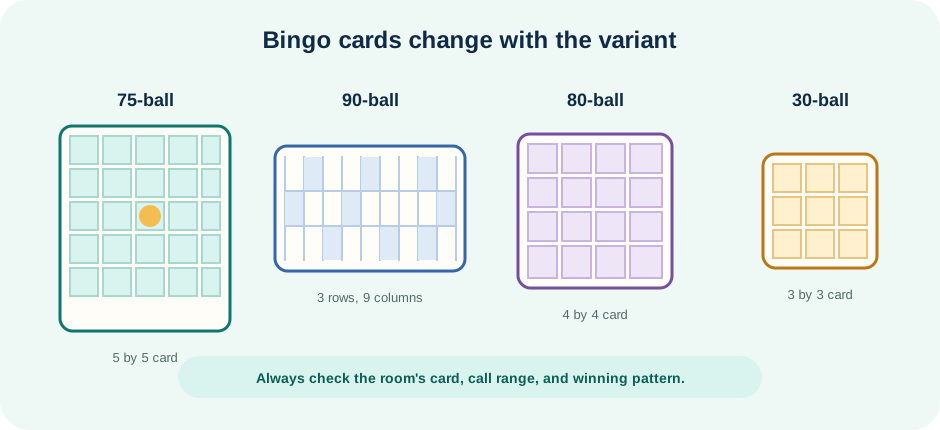
- 75-ball
- Usually a 5 by 5 card with a named pattern.
- 90-ball
- A 3-row ticket with line and full-house prizes.
- 80-ball
- Often a 4 by 4 card with compact patterns.
- 30-ball
- A fast 3 by 3 coverall format.
Learn the card formats
Section titled “Learn the card formats”- 75-ball bingo covers the familiar BINGO columns and pattern play.
- 90-ball bingo explains tickets, strips, one line, two lines, and full house.
- 80-ball bingo describes the 4 by 4 format and common color grouping.
- Speed and 30-ball bingo shows why fewer calls increase pace but do not remove chance.
Learn what determines a result
Section titled “Learn what determines a result”- Skill versus RNG separates random input from score-producing decisions.
- Matchmaking and scoring explains asynchronous opponents, comparable game material, leaderboards, and settlement.
- Blackout and coverall explains full-card targets and claim rules.
- Four corners and multi-line bingo illustrates lines, frames, shapes, and progressive stages.
Read the rules in this order
Section titled “Read the rules in this order”- Format: card size, number pool, free space, and cards per entry.
- Target: exact winning pattern or scoring objective.
- Input: random call sequence, preset puzzle, live draw, or shared seed.
- Action: manual daubs, boosts, claims, or no player decision.
- Settlement: first valid claim, highest score, paytable result, or ranked tournament.
- Cost: card price, entry fee, stake, or promotional currency.
- Interruption rule: what happens when the connection or app fails.
A familiar card design does not answer these questions. Use the game-specific rules shown before the entry, not a general bingo guide, when settling a dispute.